The Sky Dimension started as a Nether opposite
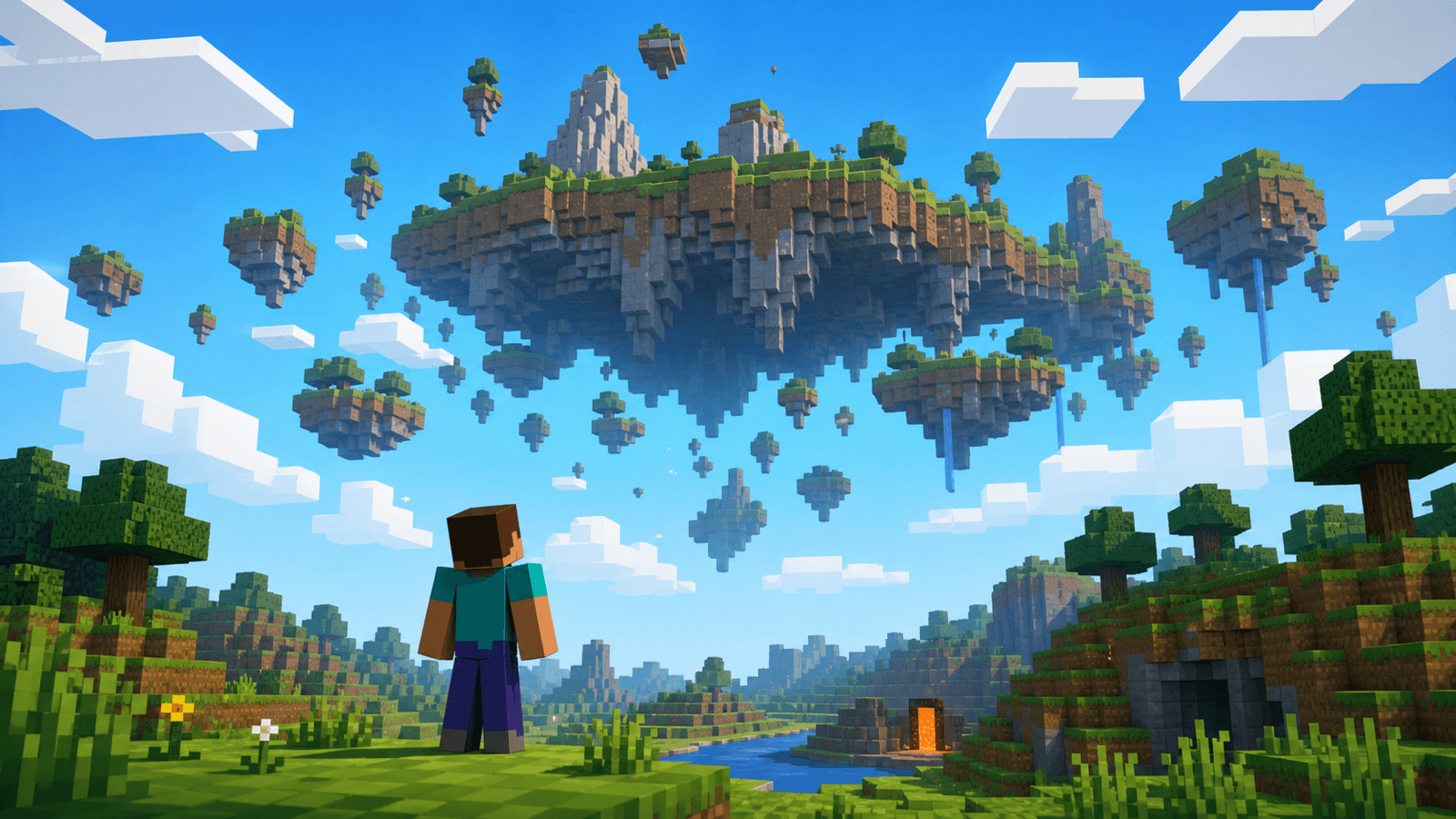
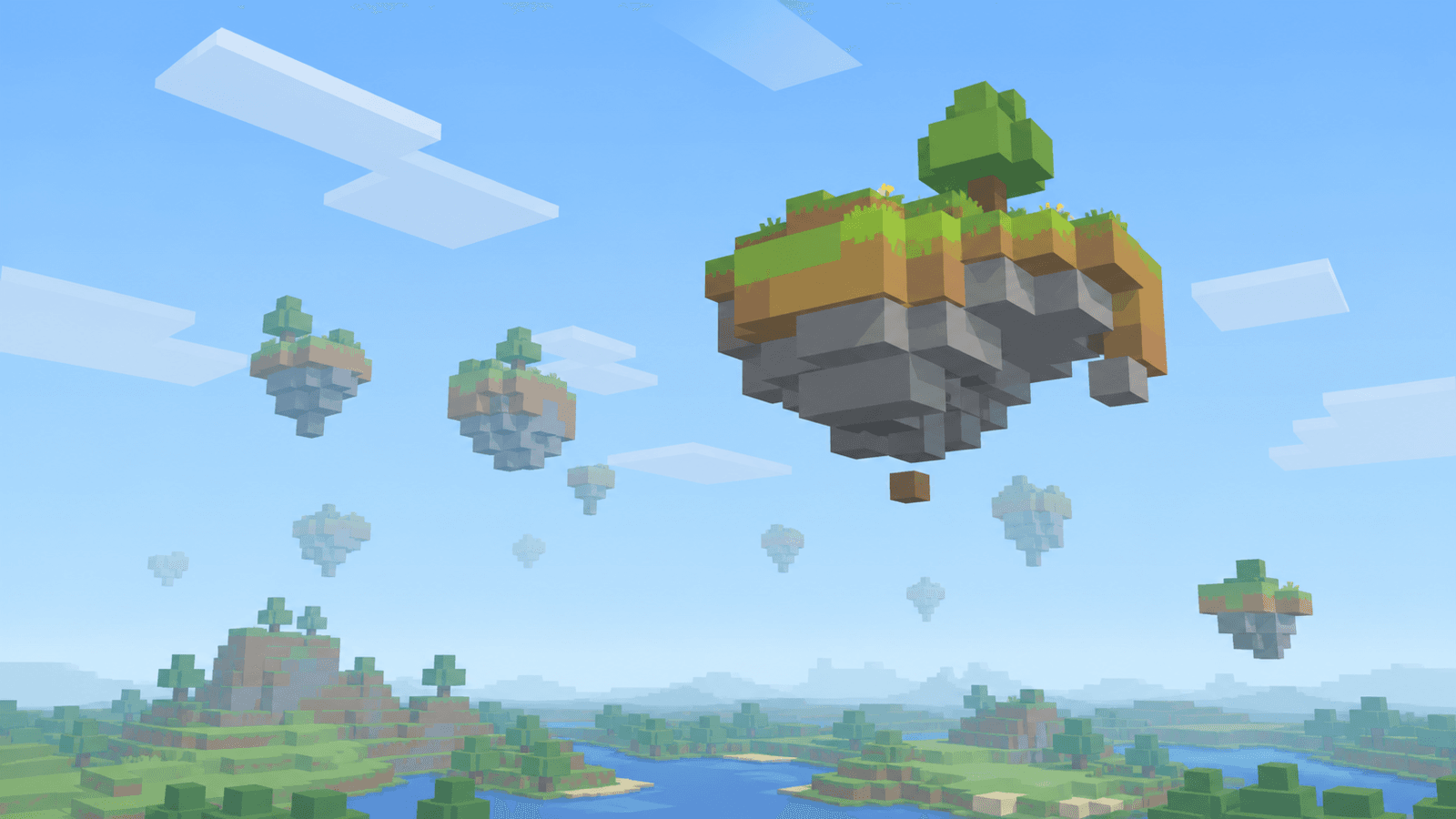
The Sky Dimension belongs to the same family of Minecraft history as the Far Lands: famous partly because it did not become normal modern gameplay. Minecraft Wiki documents it as a planned dimension made from floating landmasses in the sky, conceived as a brighter opposite to the Nether rather than as a polished survival destination with its own finished loop.
That distinction matters. The idea was not simply "the End before the End." It was an early design direction from a period when Minecraft was still deciding what extra dimensions should do. The Nether already had a strong identity: danger, distance compression, hostile terrain, and a clear feeling of leaving the Overworld. A sky-world counterpart suggested the opposite mood, but not yet a complete multiplayer purpose.
For vanilla SMP players, this is the useful part. A dimension is not just a biome pack. It changes travel, resources, progression, bases, claims, and what players consider fair. If an old prototype never became a full feature, the question is why the finished game chose a different role for that space.
Test builds showed the idea, but not a finished feature
The most concrete public trace is the Beta 1.6 Test Build 3 era, where debug access could expose unfinished Sky Dimension behavior. Minecraft Wiki's version history ties that prototype to floating Overworld-like terrain rather than to a complete dimension with stable survival rules. It was visible enough to become legendary, but unfinished enough that treating it as "cut content that should simply return" skips the hard design work.
That is where community memory can get fuzzy. Players often remember the Sky Dimension through later Aether comparisons, old screenshots, modded sky worlds, or the general appeal of islands above the clouds. Those references are understandable, but they blend official prototype history with community imagination. A vanilla SMP should keep those categories separate.
That difference is practical. A server that adds a sky dimension may be fun, but it has changed the vanilla progression map. New resources, easier elytra travel, extra build space, or alternate boss routes can all shift the economy and the pace of a shared world.
The End took over the role of the third dimension
The Sky Dimension did not disappear in a vacuum. Beta 1.9 Prerelease 4 introduced the End as the game's third dimension, turning the extra-dimension slot toward a stark final arena, obsidian platforms, Endermen, and the Ender Dragon rather than a bright floating Overworld. Minecraft Wiki's history pages track that pivot clearly: the finished release path favored an endgame destination with a boss encounter over the earlier sky-island concept.
That choice shaped how multiplayer servers still think. The End is not just another place to build. It carries progression pressure. Players race for the dragon, negotiate End access, reset outer islands, organize elytra trips, and argue about whether late joiners can still get fair access to shulkers and gateways. A peaceful sky world would have created a very different set of server problems.
In other words, the Sky Dimension matters because it highlights what vanilla Minecraft chose not to become. The game could have made its third dimension a broad floating landscape. Instead, it made it sparse, strange, and progression-heavy. Every vanilla SMP inherits that choice unless it deliberately modifies it.
Why players still want sky worlds
Community discussions around the Sky Dimension rarely sound purely technical. Players talk about atmosphere: floating islands, brighter exploration, a gentler counterweight to the Nether, or the feeling that Minecraft once had room for a more mysterious alternate world. Suggestions to revive it often overlap with Aether nostalgia, but the underlying desire is broader. Players want a place that feels expansive without being another cave, ocean, or fortress run.
That desire is real, and it explains why custom sky dimensions can be attractive on survival servers. Extra buildable sky space gives communities dramatic bases, new routes, and a clean visual identity. It can also solve some practical problems for older worlds, such as giving long-term players fresh terrain without resetting the Overworld.
For strict vanilla players, that tradeoff is the core issue. The best vanilla SMP for them may be one that leaves the three official dimensions alone and builds identity through rules, world age, moderation, and community projects. A more experimental minecraft SMP can still be excellent, but it should say plainly where it departs from vanilla.
How to read dimension claims on server listings
When you compare vanilla SMP listings on the homepage server list, use the Sky Dimension as a filter for clarity. A server does not need to avoid custom ideas forever, but it does need to label them well. "Vanilla," "semi-vanilla," "datapack," "plugin-enhanced," and "custom dimension" should not be treated as interchangeable marketing words.
Those questions are more useful than asking whether a server "feels like old Minecraft." Removed-feature nostalgia can be charming, but server selection depends on mechanics. A custom sky dimension may be a perfect fit for players who want fresh exploration and looser vanilla boundaries. It may be the wrong fit for players who want a world governed by the same assumptions as singleplayer survival.
The broader Minecraft history archive is useful because unfinished ideas reveal the tradeoffs modern servers still have to explain. The Sky Dimension never shipped as planned, but the desire behind it never really vanished. Good server listings turn that desire into clear rules. Weak listings turn it into vague atmosphere. Choose the one that tells you exactly how the world works before you invest your time.