
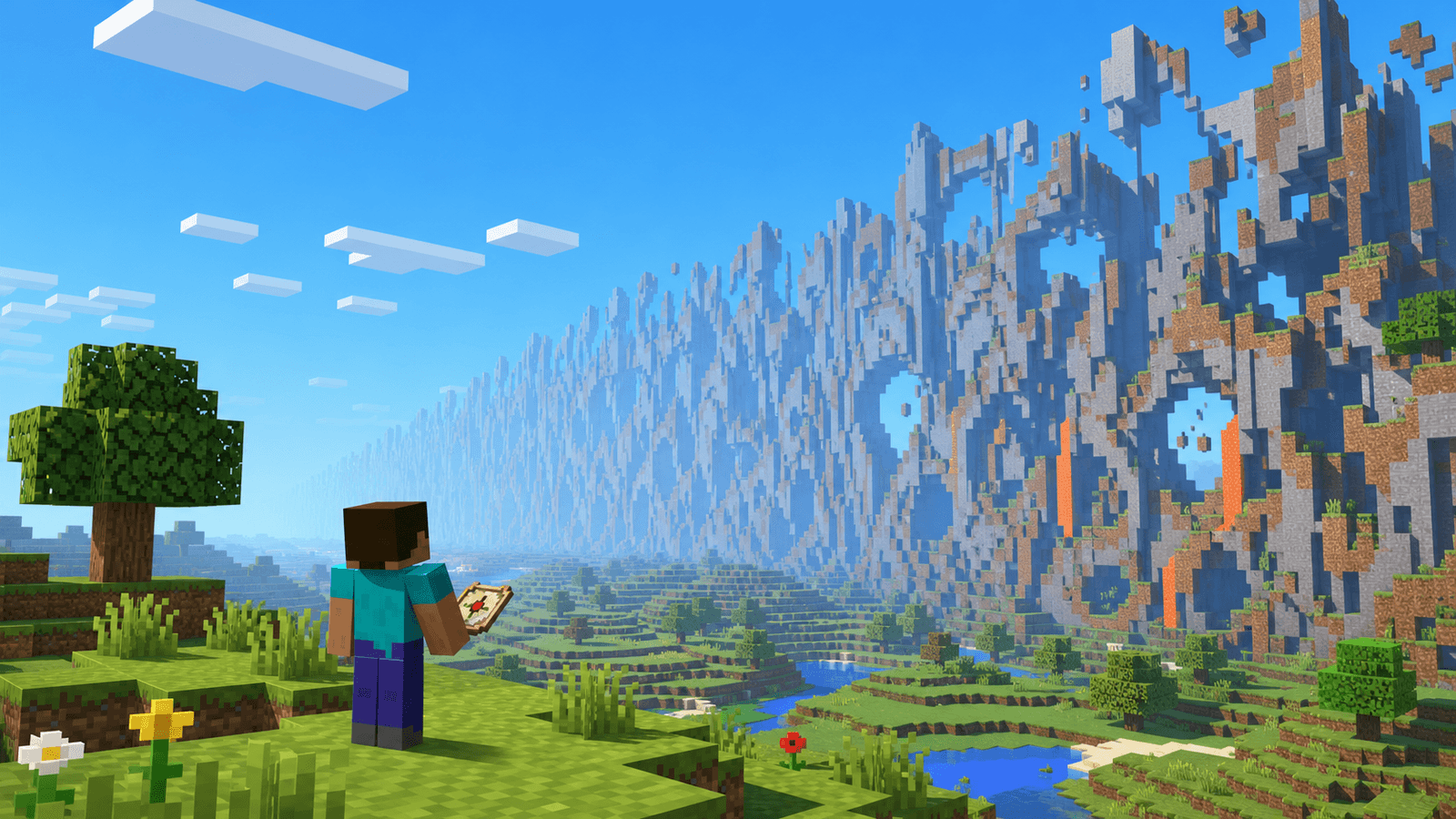
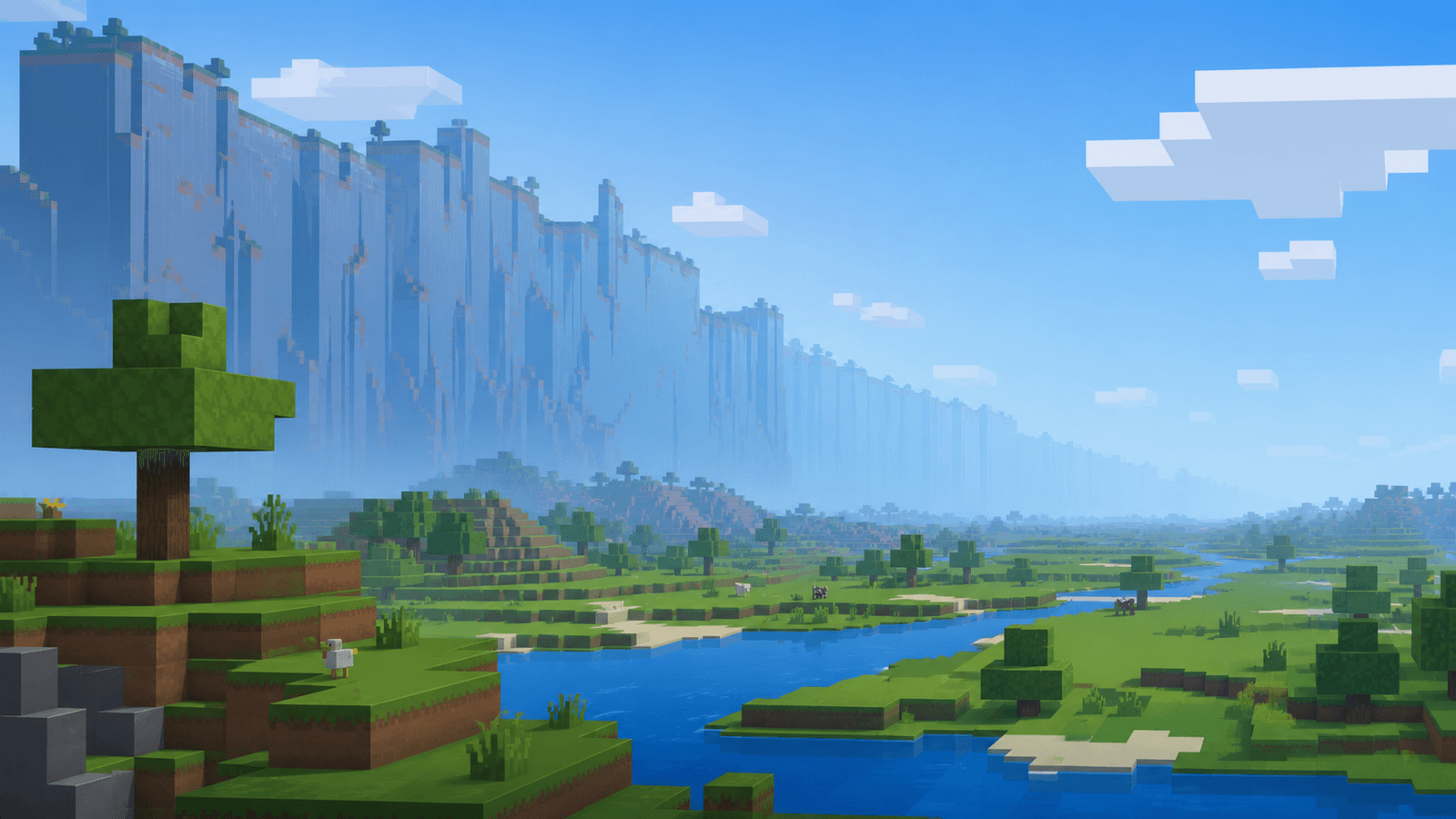
The original Far Lands were a version-specific accident
The Far Lands were never a planned biome, structure, or hidden destination. They were a precision failure in the old terrain generator. Minecraft Wiki's Infdev and world-generation history pages trace the best-known form of the bug to the March 27, 2010 Infdev terrain update, where the familiar warped wall began appearing around 12,550,824 blocks from the origin. That is the version history most players mean when they talk about "the" Far Lands.
That detail matters because players still mix the versions up all the time. In a recent r/Minecraft help thread, someone loaded full release 1.7.2, teleported far out, and expected the Far Lands to appear. The first correction they got was the important one: you need Beta 1.7.3 or earlier, not release 1.7.2. That confusion is common enough that it has become part of the subject itself. Far Lands history is not just about coordinates. It is about knowing which era of Minecraft you are actually talking about.
For vanilla Minecraft servers, that means "Far Lands" should never be treated as vague flavor text. If a server says it has them, the real question is whether it preserved old terrain, runs an old version, imported a historical world, or built a custom recreation. Without that context, the phrase tells you almost nothing.
Beta 1.8 removed them as part of a larger world rewrite
The cleanest official shorthand for the removal comes from Minecraft's own "Block of the Week: Mushroom" article, which notes that mushroom blocks arrived in Beta 1.8 at the same time the food system, villages, ravines, rivers, and the Far Lands disappeared. Minecraft Wiki's world-generation history fills in the technical side: Beta 1.8 overhauled terrain generation, reworked height handling, added major structures, and stopped the Far Lands and Farther Lands from generating in normal Java worlds.
That is why treating the removal as a tiny isolated fix misses the point. Beta 1.8 changed the feel of the world at every scale. Near spawn, it pushed Minecraft toward a more directed survival loop with villages, strongholds, mineshafts, and clearer progression. At extreme distance, it removed one of the game's most dramatic accidental edge cases. The result was a world that became easier to expand for future updates, but less haunted by its own math.
That shift is why the topic still matters to a vanilla SMP. Modern Java players do not normally walk toward a generator failure anymore. They walk into server decisions about old terrain, expansion, borders, and whether the world treats age as clutter or as content.
Players still treat the Far Lands like a real expedition
If the Far Lands were only a bug, the subject would have faded years ago. It did not. In 2026, players are still posting help threads about how to reach them, and other players are still correcting the version requirements from memory. A recent r/Minecraft milestone post about reaching the Far Lands after two years turned into detailed discussion of travel speed, sea travel efficiency, and how many people have actually completed comparable journeys. Another thread celebrated KurtJMac finally reaching them after fourteen years, with commenters explaining why the slow, personal version of the journey mattered as much as the destination.
Minecraft Feedback tells the same story from a different angle. Requests to bring the Far Lands back keep reappearing, often arguing that they added mystery or long-distance incentive that the modern game no longer produces on its own. Whether or not that is a good design idea, it proves something useful for article writing and server selection alike: players remember the Far Lands less as a rendering glitch and more as a promise that absurd distance could still mean something.
That is why this history belongs in a multiplayer conversation. A healthy minecraft SMP does not need literal Far Lands to create that feeling. It needs believable scale, difficult travel, and a community that treats far-away places as destinations rather than as empty coordinates.
Modern servers keep the idea alive in different ways
This is where the topic becomes more practical than nostalgic. Good vanilla Minecraft servers often preserve the Far Lands idea without claiming the original bug is still active. They do it through old terrain, update boundaries, harsh travel regions, and public infrastructure that makes distant land feel distinct from spawn.
Peaceful Vanilla Club is a strong example because the connection is explicit rather than ornamental. Its local wiki describes a first and second Farlands ring, a Betalands region between them generated with a plugin to mimic pre-1.0 beta terrain, and Betaways iceways built to carry players from the old map toward newer land. On Peaceful Vanilla Club, the Far Lands are not being used as empty branding. They are a map-planning concept that shapes how players move, settle, and interpret world age.
That is the mature version of Far Lands nostalgia. Not "pretend the old bug is still there," but "use historical generation ideas to make distance legible again." A long-running vanilla SMP can do that with preserved chunk borders, historical regions, manual travel expectations, or public routes that help new players understand where the world changed and why it matters.
Those checks matter because the strongest Far Lands-style servers do not rely on one legendary phrase. They show how their map actually works, and they leave players enough evidence to judge whether the history is real, recreated, or only thematic.
Read Far Lands language like world-policy language
When you browse vanilla Minecraft servers, "Far Lands" should function as a world-policy clue, not as automatic proof of authenticity. The useful questions are concrete. What version created the oldest active terrain? How are updates handled? Are distant regions preserved, regenerated, or deliberately separated by borders and travel systems? Is this a museum-like server, a fresh-start survival world, or a vanilla SMP that tries to balance both?
That is also why the Far Lands remain such a useful topic. They force a server to reveal how it thinks about age, distance, and preservation. Some worlds want the oldest terrain to stay visible forever. Others would rather keep new resources and new biomes reachable for new players. Both can work. What matters is whether the world is honest about the tradeoff.
The blog can help you compare more history-heavy mechanics like this, but the practical takeaway is simple: choose the server where map history is explained, not implied. The Far Lands disappeared from ordinary Java terrain a long time ago, yet they still help players tell the difference between empty nostalgia and a world that has actually thought through how distance should feel.