
What Minecraft monoliths actually were
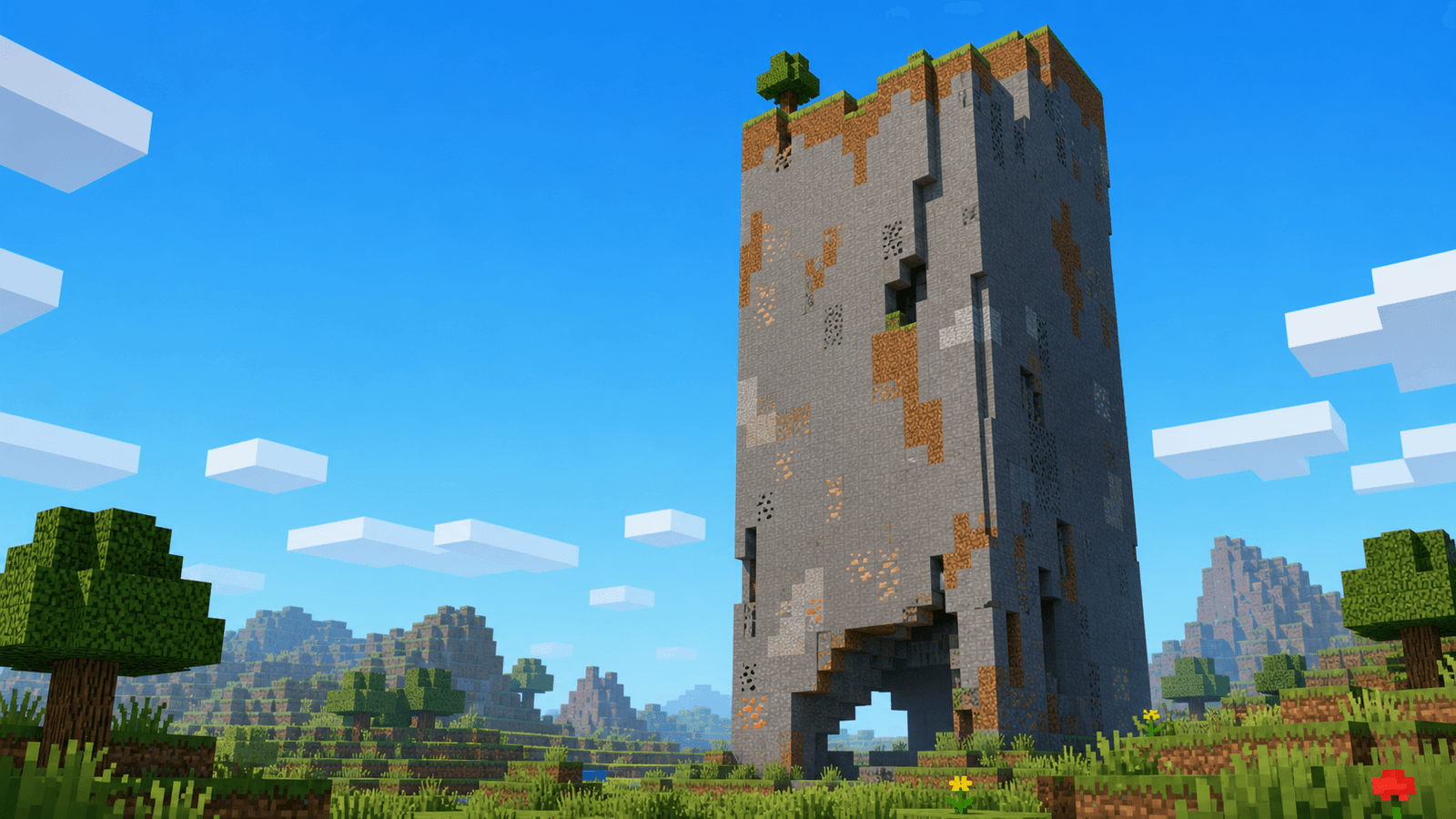
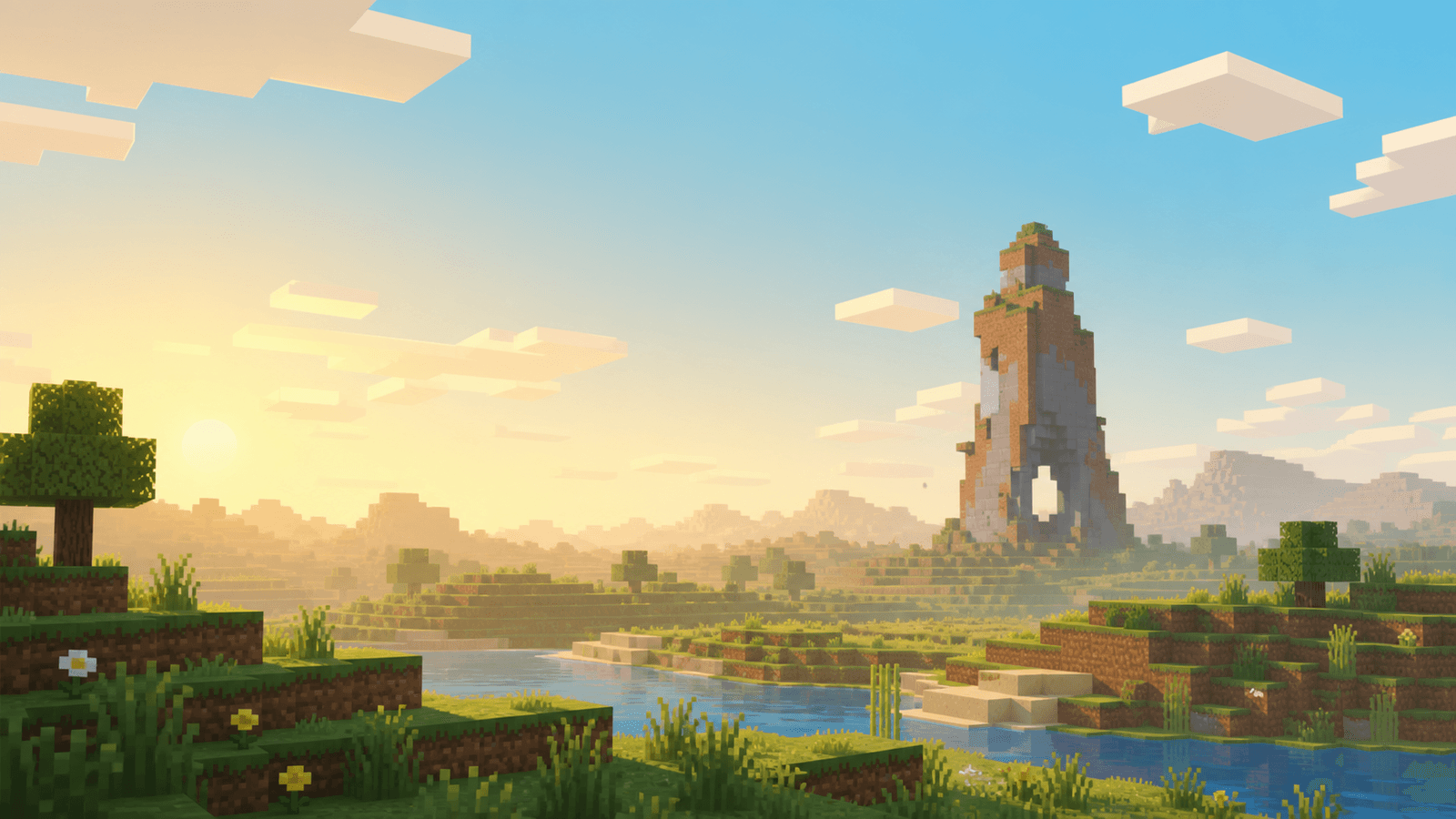
Minecraft monoliths were not planned structures like villages, strongholds, or trial chambers. They were terrain generation accidents from the period when Minecraft's infinite-world experiment was still being shaped in public. Canonical Minecraft Wiki notes describe them as glitched areas from later Infdev and early Alpha where terrain could abruptly invert: ground filled the upper space up to the height limit while the lower area became open air or water. The result looked like a sheer block of natural terrain had been lifted into the sky.
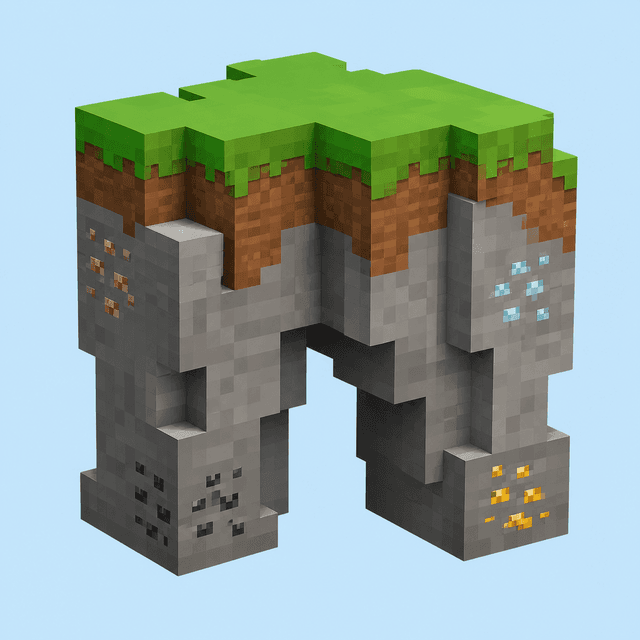
That is why monoliths feel different from most removed features. A quiver, mob, or old block is easy to picture as a discrete feature. A monolith changed the landscape itself. It could contain grass, stone, ores, caves, and sometimes a strange hollow world beneath it, depending on the exact version that generated the chunks. In a shared world, that kind of terrain would become a landmark immediately. Players would build bridges, bases, mines, museums, and myths around it.
For Vanilla SMP players, the important distinction is that a monolith is a version-specific terrain artifact. It belongs closer to the history of world generation than to the list of normal structures. If you are comparing servers from the homepage server list, that difference matters: "historic world" is a meaningful claim only when the community can say what version created the terrain and what has been preserved since.
Why the bug appeared in Infdev and Alpha
The technical explanation is dry, but the effect is easy to understand. The old generator used noise maps to shape terrain height and hilliness. According to the Minecraft Wiki's monolith page, the bug appeared when a terrain scale value could become negative. Once that happened, the usual relationship between low space and solid ground flipped, so areas that should have been air or water could become terrain, and areas below could become hollow.
The documented history starts with Java Edition Infdev 20100611, when a terrain generation rework made monoliths possible. Later Infdev builds changed what sat beneath them. For a short window around Infdev 20100624 through 20100629, community documentation records the bedrock layer being pulled upward enough that the void could be exposed below the monolith. That detail sounds like trivia, but it is exactly the kind of version boundary that matters to preservation players. Two worlds can both contain monoliths and still offer different hazards, cave behavior, ore placement, and underside spaces.
Community discussion around monolith hunting shows why this remains confusing. Players in Golden Age Minecraft threads often talk about seed tools, coordinate mods, old launchers, and mismatches between a finder map and the world they see in-game. That is the real lesson for modern server selection: old terrain is reproducible only when the seed, version, generator, and already-generated chunks line up. A vague screenshot is not enough.
How monoliths disappeared and why they still get rediscovered
Monoliths stopped being part of normal Java world generation when the terrain-scale behavior changed in early Alpha. Minecraft Wiki's history table points to the Alpha v1.2.0 preview as the patch point, while discontinued-feature documentation frames the original run from Infdev 20100611 through Alpha v1.1.2_01. Either way, the practical answer is the same for players: normal current Minecraft does not generate original monoliths just because you travel far enough.
That puts monoliths in the same broad memory category as the Far Lands, but they are not the same phenomenon. Far Lands confusion usually begins with distance from spawn and old coordinate limits. Monolith confusion begins with versioned terrain scale and whether the chunk ever existed under the right generator. Both subjects teach the same server-selection habit: do not treat old Minecraft words as decoration. Ask what the claim means in playable terms.
Minecraft's later custom-world systems also complicate the story. Wiki notes describe ways to recreate monolith-like terrain in some customized or data-driven versions by forcing negative terrain-related values, but that is not the same as an original Infdev or Alpha artifact. On a modern minecraft smp, custom terrain can be interesting, but it should be labeled as custom. A server that calls itself vanilla should be especially clear when its terrain history comes from old chunks rather than active custom generation.
The renewed interest in monoliths makes sense. They are huge, visual, and rare enough to feel discovered rather than placed. Recent player threads still include people asking what versions have them, how to find them without a chosen seed, and whether a found monolith will survive if the world is updated. The answer many preservation players give is practical: generate the terrain first, then update carefully. That advice applies to server admins too.
For readers comparing the best vanilla smp fit, monoliths are less about joining a world that literally has one and more about learning how the community handles history. A server with preserved terrain should be able to tell a coherent story. Where is the old region? Is it protected? Can new players visit it? Did later updates overwrite anything? Does the server document world age, resets, and imported areas? These questions reveal more than a dramatic landscape ever could.
What monolith history teaches server players today
The complete history of Minecraft monoliths is ultimately a lesson in world claims. Vanilla survival is built on trust: players invest time because they believe the world rules are clear, the map history is honest, and the community will not quietly change the ground under them. Monoliths expose that trust problem in an exaggerated form because they sit at the intersection of old code, generated chunks, and modern nostalgia.
If a Vanilla SMP advertises old terrain, long-term world continuity, or rare historical landmarks, read the description with monoliths in mind. A good listing should separate "we run modern vanilla with an old map" from "we run an old version" from "we use custom generation inspired by old glitches." Those are all different experiences. The first may suit players who want current mechanics in a museum-like world. The second may suit Golden Age players who accept old bugs and limits. The third may be fun, but it is no longer a plain vanilla promise.
That is also why the broader Minecraft history archive can make server browsing easier. Once you know how removed terrain features worked, you become better at reading claims about old spawn regions, imported chunks, no-reset worlds, and version museums. The goal is not to demand that every server be a preservation project. It is to choose a community whose world story matches the way you want to play.
Monoliths disappeared from ordinary generation because Minecraft's terrain systems matured. Their value now is as a test of language. When a server describes its world clearly, players can decide whether the history is part of the adventure or just background flavor. When it cannot, the dramatic words become noise. Use that distinction when choosing a vanilla smp: the best worlds are not the ones with the strangest screenshots, but the ones where the history, rules, and player expectations line up.