
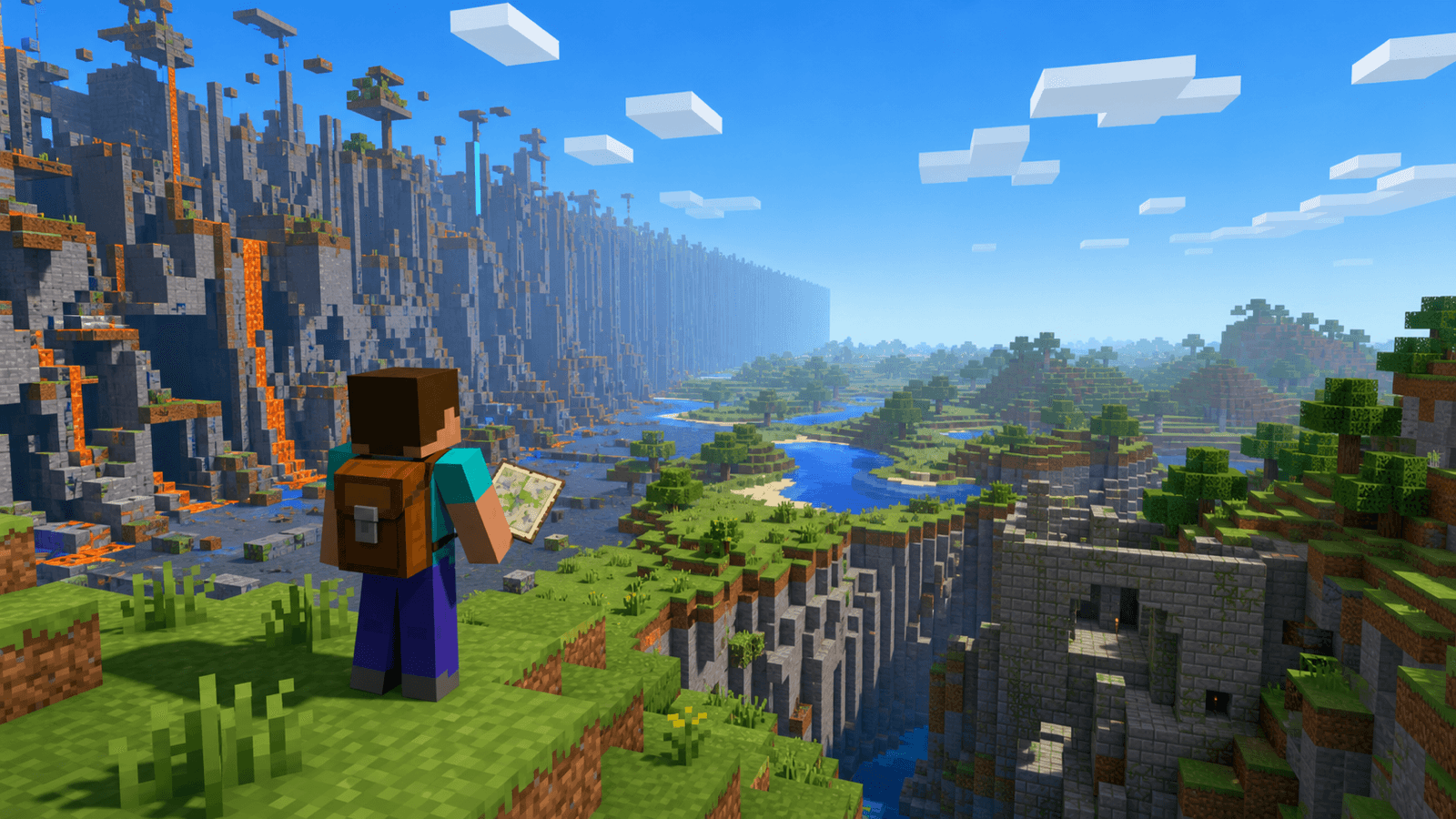
Beta 1.8 became a cultural line, not just a patch
There is an official Minecraft sentence that says almost everything. In Mojang's old "Block of the Week: Mushroom" article, mushroom blocks are introduced as arriving in Beta 1.8 at the same time the food system, villages, ravines, rivers, and the Far Lands were removed from the game. That is a remarkable amount of history packed into one aside, because it captures why the change felt quiet and huge at the same time.
Beta 1.8 released on September 14, 2011 as the first part of the Adventure Update. The Far Lands fix mattered, but the update's public identity was much broader: hunger, sprinting, stronger survival structure, and terrain that felt more directed than the older beta world. That is why people still talk about Beta 1.7.3 and Beta 1.8 as if they were two different eras rather than two adjacent version numbers.
Community memory reflects that split very clearly. In one recent r/GoldenAgeMinecraft thread, players describe Beta 1.7.3 as the last beta that still felt like beta, while Beta 1.8 is remembered as the moment Minecraft got "actual biomes," hunger, sprinting, and the removal of old terrain generation. That is not rigorous patch-note language, but it is useful multiplayer language. It tells you that the Far Lands disappeared as part of a wider change in what the world was supposed to feel like.
The Far Lands disappeared because terrain generation was rewritten
Minecraft Wiki's world-generation history is the clearest technical summary. The Infdev terrain change on March 27, 2010 is where the familiar Far Lands form begins appearing at about 12,550,824 blocks. Then Beta 1.8 pre-release overhauls terrain generation again: continents and open ocean, biome-driven height, new biome logic, strongholds, villages, ravines, mineshafts, and the removal of both the Far Lands and the Farther Lands from ordinary Java terrain.
The separate Beta 1.8 wiki page makes the fix sound almost mundane: the Far Lands were removed because the low-noise and high-noise generators no longer overflowed. That dry explanation matters. It reminds us the Far Lands were not removed by deleting a named structure or banning a hidden biome. They disappeared because the math changed.
That shift is why the article still matters to a vanilla SMP audience. Once the game's own generator stopped producing that visible edge case, servers had to decide for themselves how much history and difficulty they wanted distance to carry.
The version confusion never really went away
One reason Far Lands articles still need to be precise is that players keep mixing up beta and release numbering. A well-circulated r/Minecraft help thread shows the pattern perfectly: a player launched "1.7," went looking for the Far Lands, and hit an invisible border. The top replies were all variations of the same correction: you need Beta 1.7.3, not release 1.7.
That sounds minor, but it is exactly the kind of confusion that makes old-world server copy slippery. "Runs old terrain" can mean the world once generated old terrain, still contains old chunks, deliberately recreates old generation, or simply likes the aesthetic. Those are not the same promise. A good minecraft smp should not make readers reverse-engineer them from nostalgia alone.
That is also why the broader Far Lands history and the Beta 1.8 history are slightly different articles. What the Far Lands were and why they disappeared explains the phenomenon itself. Beta 1.8 is the moment that turned the phenomenon into a version boundary players still need to read carefully.
Long-running SMPs now have to choose that old feeling on purpose
Modern preserved worlds show what happened after Beta 1.8 much better than trivia lists do. On Minecraft Forum, one long-running survival journal built around upgrading a world from Infdev to full release treats version boundaries as part of the play experience: old builds stay, later terrain begins elsewhere, and the world carries its own history forward. That is the singleplayer version of a decision many long-lived SMPs have to make at community scale.
The PVC corpus shows a stronger multiplayer example because it is explicit about the choice. On Peaceful Vanilla Club, the Betalands are described as an outer region generated with a special plugin to mimic pre-1.0 beta terrain, placed between a first and second Farlands ring. The surrounding Betaways project exists to move players across those outer regions without falling back on teleports, and the wiki is blunt about the underlying philosophy: the world should still be traveled, not skipped.
That is the real afterlife of Beta 1.8. Once the original Far Lands stopped being normal vanilla output, any world that still wants the beta-era feeling has to choose it deliberately through map policy, region design, or travel rules.
How to read Beta 1.8 claims when comparing a vanilla SMP
When you compare vanilla SMP options on the homepage server list, Beta 1.8 history gives you a much better filter than "this server respects old Minecraft." Ask which version generated the oldest active terrain. Ask whether post-update regions are preserved, reset, or deliberately separated. Ask whether long-distance movement is part of survival play or flattened by teleports and shortcuts. Ask whether the server is preserving history, recreating history, or just theming itself around it.
Those questions are more useful than asking whether the server has "Far Lands energy." A history-first vanilla SMP can be fantastic if you love roads, chunk borders, museums, and distant regions that mean something. A fresher world can be better if you want equal access to new terrain and a cleaner onboarding path. The best vanilla SMP for you is the one that states its tradeoffs instead of hiding them behind legend.
Why the quiet ending still matters
Beta 1.8 quietly ended the Far Lands era because it moved Minecraft away from one of its most famous accidental horizons and toward a more designed survival structure. Players did not stop caring. They just started caring in a different way. The question changed from "will the world eventually break?" to "how does this world handle age, distance, and continuity?"
That is why the topic still belongs in a server-selection conversation. It teaches players to read version claims carefully, to separate preserved history from recreated atmosphere, and to notice when a community has actually thought about what exploration should feel like. For more comparisons like this, the blog is useful, but the core takeaway is simple: good vanilla Minecraft servers explain their world history plainly. Once Beta 1.8 removed the original Far Lands, that honesty became more important than the bug itself.