
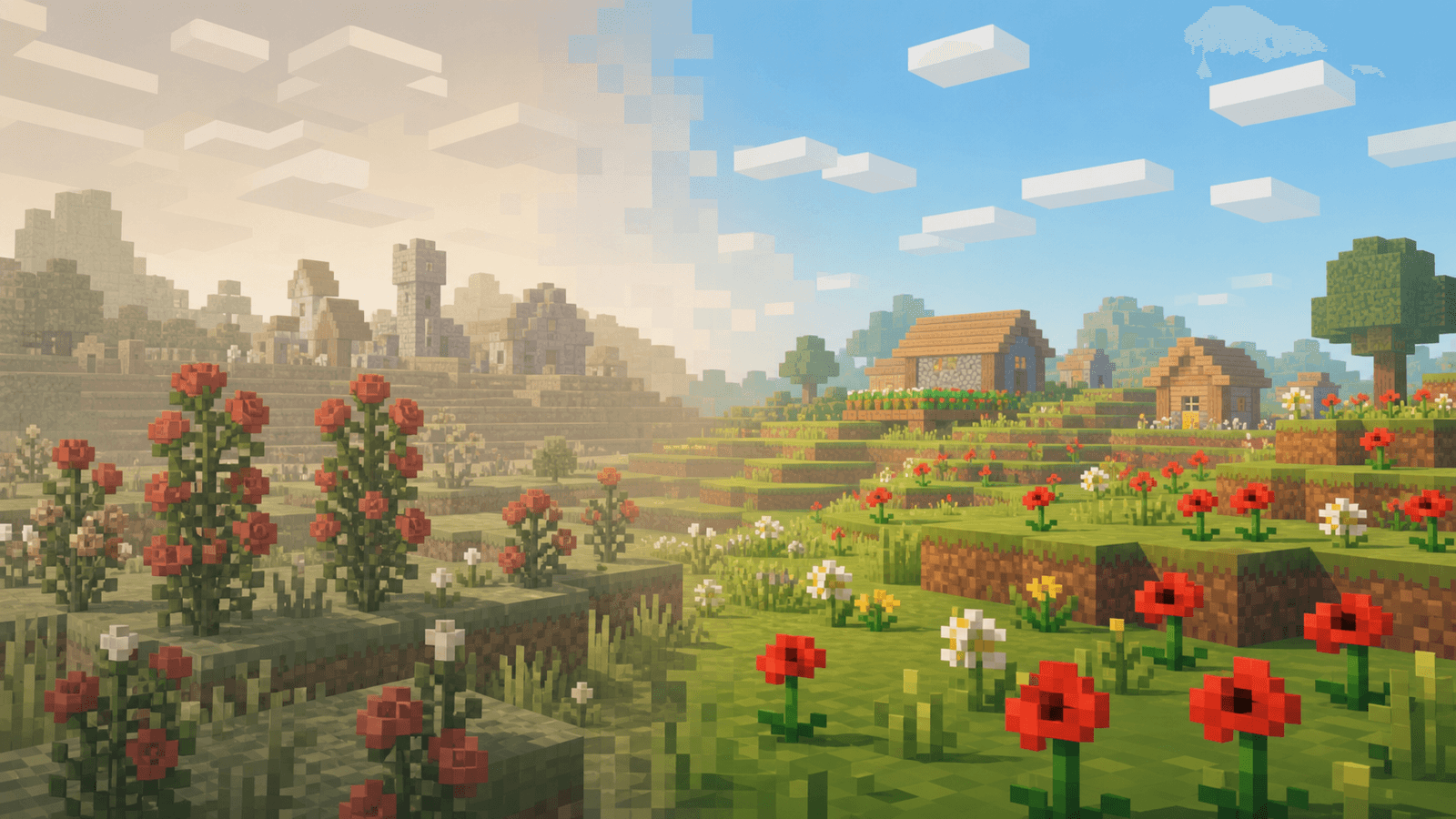

The rose did not vanish in a single clean break
The old rose was one of Minecraft's simple early flowers: a one-block red plant that could become rose red dye and later fit the small rituals players built around bases, paths, and iron golems. Minecraft Wiki's poppy history records roses by name in Beta, notes their dye use, and tracks the later moment when iron golems dropped roses before the flower was renamed.
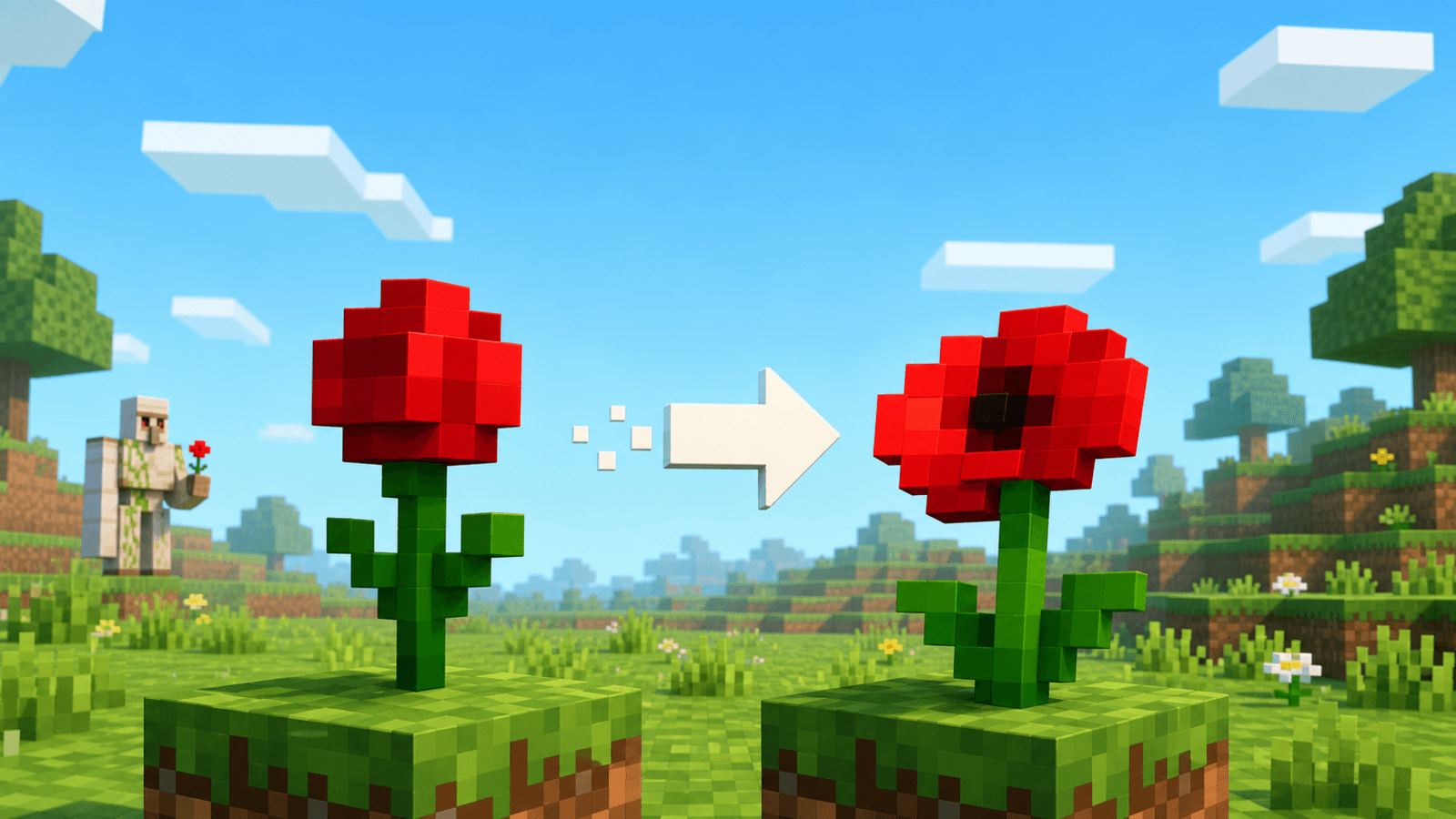
That history is why "the rose was removed" is both emotionally true and technically incomplete. The old item name and texture stopped being the current survival flower, but existing world data did not become a pile of missing blocks. In 13w36a, the old rose was effectively carried forward as a poppy through a name and texture change. Players loading long-running worlds saw a familiar red flower become a different red flower.
For vanilla Minecraft servers, that distinction matters because old worlds have memory. A server can preserve a 2012 map, update it through modern versions, and still lose the exact look of old roses unless it uses a resource pack or stays on an older jar. The world did not necessarily lose its flower locations, but it did lose a tiny part of its visual language.
1.7.2 made flowers more specific
The rose-to-poppy change landed inside a much larger 1.7.2 shift. That release family expanded biomes, added more plant variety, and made the Overworld feel less like a repeated set of broad terrain types. In that context, the one-block rose was a rough early symbol. The poppy became the small red flower, while the rose bush handled the larger rose shape.
Minecraft Wiki records the 13w36a change plainly: roses were renamed to poppies, their texture changed, poppies became offset like grass, and they became flammable. The next snapshot, 13w37a, also changed poppy dye output from two dye to one. These are small details, but together they show that the flower was not only renamed for flavor. It was being folded into a broader plant system with more consistent behavior.
The modern poppy now has its own ordinary survival life. It generates in many Overworld biomes, can appear from bone meal under the right conditions, crafts into red dye, works with bees, can help create bee nests near saplings, and still drops from iron golems. In day-to-day play, it is not a missing feature. It is a current vanilla block with a changed historical identity.
Why players still remember the old rose
The single rose is remembered because it sat at the intersection of early Minecraft simplicity and personal world history. It was not powerful. It did not unlock progression. It did not define combat or redstone. It was a tiny, visible marker from the era when Minecraft's block list was shorter and individual texture changes felt larger.
Community discussion around the rename usually falls into two lanes. Some players argue that roses make more sense as bushes, so the modern split between poppies and rose bushes is reasonable. Others miss the older sprite because it belonged to their first worlds, old texture packs, or pre-1.7 memories. Both reactions are useful for server readers because they separate mechanical survival from atmosphere.
That split is easy to see in how people talk about restoring the rose. Many players do not want a new progression system; they want a resource pack, a decorative throwback, or an old-version experience. That is a much smaller ask than changing vanilla mechanics, but it still matters on multiplayer worlds because visual changes affect shared expectations.
That is the same lesson that shows up across other Minecraft history topics. Removed or renamed features become muddy when listings use them as branding without explaining the implementation. A player who sees "classic roses" should not have to guess whether the server is running Beta, modern Java with a texture pack, a custom datapack, or just a nostalgic spawn garden.
What the rename means for vanilla server listings
When comparing vanilla Minecraft servers on the homepage server list, the rose and poppy are a useful precision test. A strict current-version vanilla server should talk about poppies if it means the actual block in the game. If it talks about roses, the listing should explain whether that means rose bushes, wither roses, an old-version world, or a cosmetic pack that changes names and textures.
This is not nitpicking. Vanilla server trust depends on knowing what is standard and what has been changed. A flower rename will not ruin survival balance, but the way a server describes it can reveal how carefully it handles bigger promises: no pay-to-win items, no hidden gameplay plugins, no undisclosed reset schedule, no confusing custom mechanics disguised as vanilla.
The broader Minecraft history archive helps with that kind of reading. Quivers are a reminder that unused or almost-shipped assets are not normal vanilla features. Locked chests show how a real official joke block differs from modern command or plugin locking. The rose and poppy sit on the gentler end of that spectrum, but they teach the same habit: ask what version, what mechanic, and what presentation layer a server actually uses.
Better questions than "does it have roses?"
The better question is not whether a server "has roses." It is what the phrase changes for the player who joins. Are the flowers current poppies with no special behavior? Are rose bushes being used in builds and gardens? Is there a required pack that changes poppies back to the old rose texture? Is the world intentionally staying before 1.7.2? Are old screenshots being used for atmosphere while the live server runs current vanilla?
Those checks keep the old rose from becoming empty nostalgia. The flower itself is small, but the wording around it can tell you whether a server is precise about its vanilla boundaries. If a listing can explain a cosmetic throwback cleanly, it is more likely to explain larger gameplay expectations cleanly too.
For players looking for the best vanilla Minecraft servers, that clarity is more valuable than a perfect old texture. Poppies are normal modern Minecraft. Roses live on through rose bushes, wither roses, old screenshots, resource packs, and player memory. A good server can celebrate any of those, as long as it tells players exactly which version of the promise they are joining.