


The official post is a testing signal
Mojang's April 28, 2026 post is not a normal release note for finished survival play. It introduces two Chaos Cubed test ideas: sulfur cubes can absorb TNT, and geysers can appear across the Overworld. The same post says the features are available in Java snapshot testing and are coming to Bedrock beta and preview, then points players toward feedback and bug reporting.
That wording matters for vanilla Minecraft servers. Snapshot features can be real, playable, and exciting without being ready for a permanent multiplayer world. A player can try them in a separate test world today, while a server owner may still wait for stable behavior, bug fixes, plugin compatibility, and clearer cross-edition parity before putting them near a shared spawn, economy, or long-term survival map.
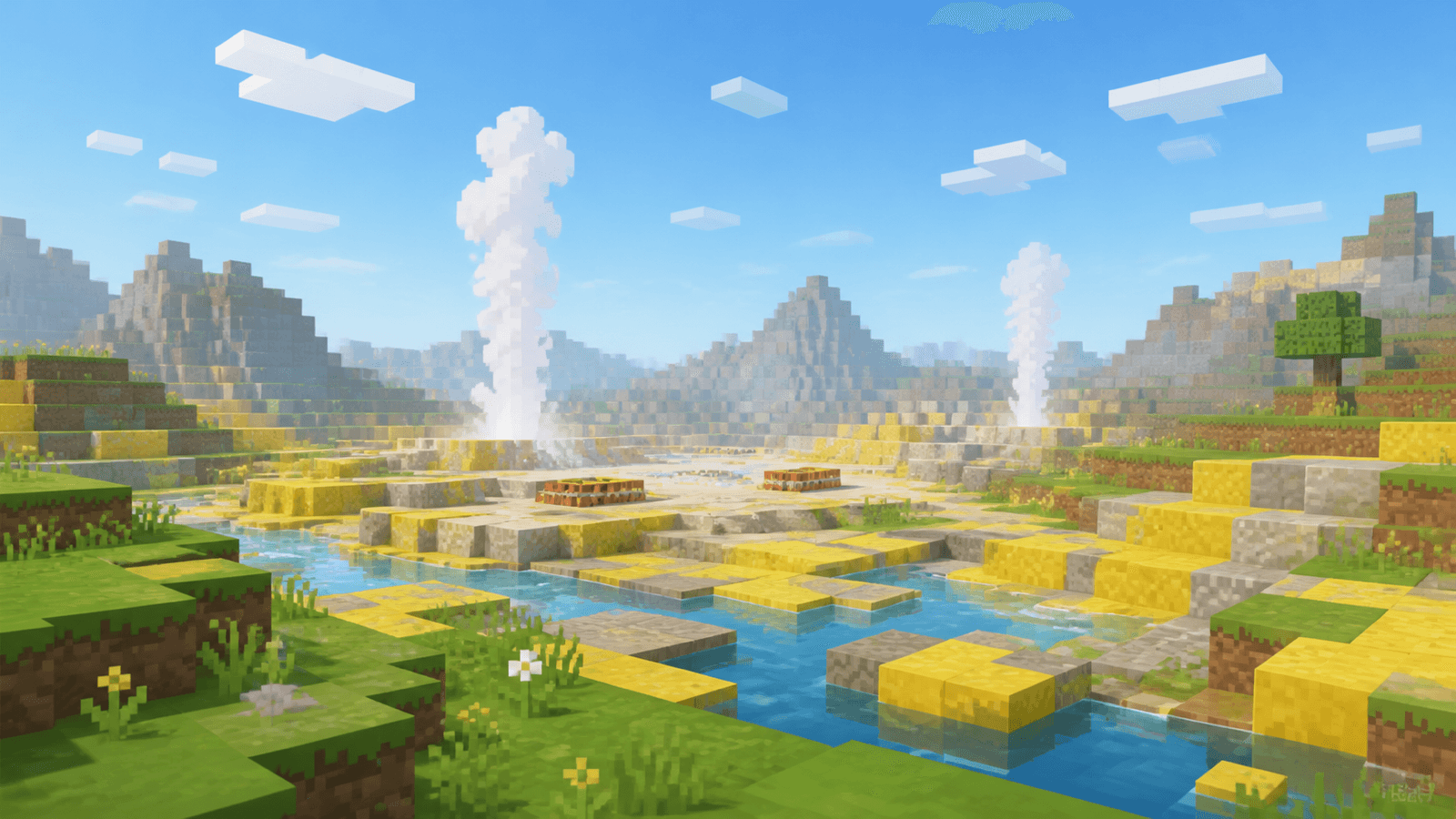
The follow-up Java Edition 26.2 Snapshot 5 changelog makes the mechanics more concrete. TNT inside a sulfur cube can be primed by redstone, fire sources, or nearby explosions. Geysers form when potent sulfur sits above a magma block and under one to four water source blocks, then erupt at random intervals and push entities upward.
That is the heart of the server-selection issue. Chaos Cubed is not just a new block palette. It adds moving hazards, explosion workflows, vertical movement, and redstone-adjacent behavior that players will immediately try to bend into farms, launchers, traps, minigames, and spawn-area decoration.
TNT cubes change more than scenery
The TNT sulfur cube is the louder feature because it turns an already disruptive block into a mobile, entity-like problem. In a private test world, that is funny. On a public survival server, it raises obvious rule questions: where can players use it, can it damage claims, does it bypass protection plugins, and does the server treat it like TNT, a mob, a vehicle, or something else?
Even if a server is strict vanilla and avoids land-claim plugins, owners still need policy clarity. Shared worlds often rely on social rules around spawn, shopping districts, public farms, roads, tunnels, and community builds. A movable explosive fits naturally into experiments and minigames, but it can also amplify griefing disputes if the rules are vague.
Community discussion around the snapshot already points in that direction. Players are treating TNT cubes as trap material, movable explosives, and minigame tools, while others are joking about performance and chain reactions. That does not prove the feature is unsafe. It proves players will explore the edge cases quickly, which is exactly what a good test cycle is supposed to reveal.
For vanilla Minecraft servers, the useful reading is practical. A strong listing should say whether the server runs stable releases only, snapshots only on a separate test map, or custom events where experimental features are allowed temporarily. If you are browsing the homepage server list, that kind of update policy is more useful than a vague "latest features soon" promise.
Geysers create movement and build pressure
Geysers are quieter than TNT cubes, but they may matter more for everyday server culture. They create vertical movement, ambient motion, landscaping possibilities, and redstone-adjacent timing questions. Players are already experimenting with geyser elevators, industrial decoration, steam-pipe builds, train chimneys, and cooldown tricks in snapshot discussions.
That makes geysers a good test of how a server handles new environmental systems. A decorative builder may see them as atmosphere. A redstone player may see launch timing and contraption potential. A minigame designer may see movement gates. A survival admin may see fall-damage risk, spawn clutter, path hazards, and new questions around public infrastructure.
This is why early excitement should be paired with boring server questions. Does the owner test geysers on a copy of the world first? Are experimental blocks allowed near shared districts? Will old roads, farms, or nether hubs be adjusted when the feature stabilizes? The best vanilla Minecraft servers do not need to reject new mechanics. They need to introduce them in a way that players can understand before damage, clutter, or confusion spreads.
Snapshot behavior should shape server timing
Snapshot culture rewards fast experimentation. Server culture rewards predictable worlds. Those two values can coexist, but only when the server draws a line between testing and the main map.
Players in snapshot threads are already reminding each other to back up worlds or use separate testing saves. That advice becomes more important for multiplayer because a mistake is no longer isolated to one person. If an experimental mechanic corrupts a build plan, changes redstone behavior, or creates an unexpected griefing route, the cost lands on the community.
For players, this makes update timing part of server fit. Some people want a cutting-edge snapshot server where instability is part of the fun. Others want a stable vanilla survival world where new content arrives only after a full release and a short testing period. Neither preference is wrong, but they should not be marketed with the same server-list language.
The wider Minecraft update archive can help here because small release notes often become big multiplayer differences. Combat items, mob behavior, structure rules, and world-generation changes all show the same pattern: the feature itself matters, but the server's communication around it matters more.
What to check before joining
When a server advertises Chaos Cubed features, sulfur cubes, geysers, or instant support for new snapshots, treat that as a reason to ask sharper questions rather than as an automatic bonus.
Those checks keep the excitement useful. Chaos Cubed looks built for player invention, and that is exactly why it needs clear boundaries on shared survival servers. A server that says "we test snapshots on a side world first" is often giving you more useful information than one that promises every new feature immediately.
So the practical takeaway is not to avoid the update. It is to compare how servers talk about it. If you want stable vanilla, choose a world that waits for finished releases and explains its update window. If you want early chaos, look for a server that labels snapshot play honestly. Either way, the strongest vanilla Minecraft servers make the testing status clear before you bring your builds, friends, and time into the world.