
Old lighting began as hard contrast
The earliest Minecraft lighting was blunt. The Minecraft Wiki's lighting history describes pre-Classic lighting as essentially two states: bright blocks under sky exposure and dim blocks outside it. That made shade readable, but not subtle. Darkness did not fall away in the modern sense; it sat on blocks like a flat visual rule.
Indev made the system more granular. One late 2009 build added 10 degrees of brightness, and a January 2010 build expanded that to 16 levels, the range Minecraft players still recognize from 0 through 15. That history matters because old lighting was not just "darker." It was often more stepped, more obvious, and more directly tied to whether a player could read safety from a torch line, cave mouth, or forest edge.
For vanilla Minecraft servers, that contrast changes how players judge the world. A base that feels cozy in modern smooth lighting can feel harsher with old blocky falloff. A cave run can feel more threatening when safe and unsafe spaces are separated by visible bands. That affects atmosphere, but it also affects onboarding: new players need to know whether the server is using current vanilla visuals, an old jar, a resource pack recommendation, or client-side nostalgia mods.
Smooth lighting changed the mood
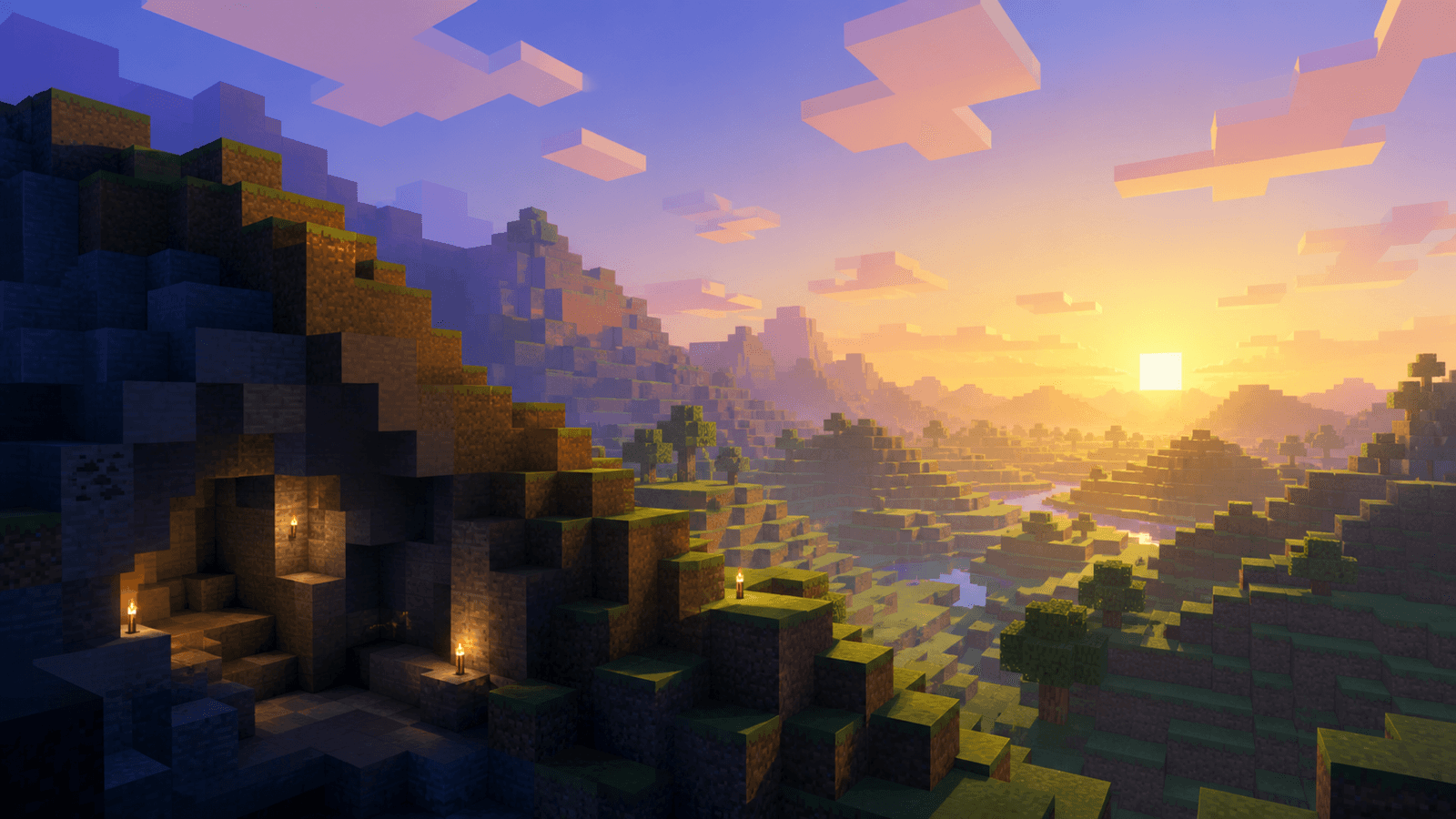
Beta 1.3, released on February 22, 2011, is one of the clean markers in this story. Its Minecraft Wiki page lists a smooth lighting engine and a new Smooth Lighting option. That did not replace light levels as gameplay logic. It changed the way faces and corners were rendered, blending light across block faces instead of leaving every transition as a sharp square.
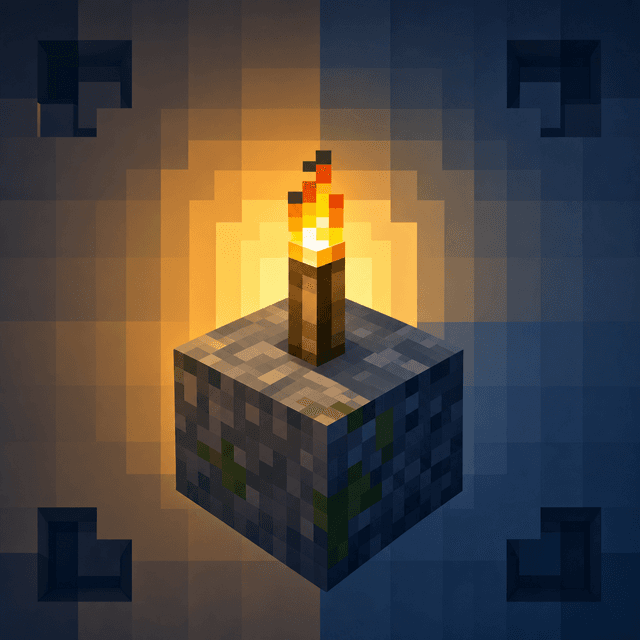
The modern Light page separates light level from rendered brightness for a reason. Light level still affects visibility-related logic, mob spawning rules, and plant growth. Rendered brightness is the visual result. Smooth lighting sits in that visual layer, blending block faces and darkening corners through ambient occlusion. That is why two players can talk past each other: one may mean spawn-proofing math, while the other means the look of a cave wall.
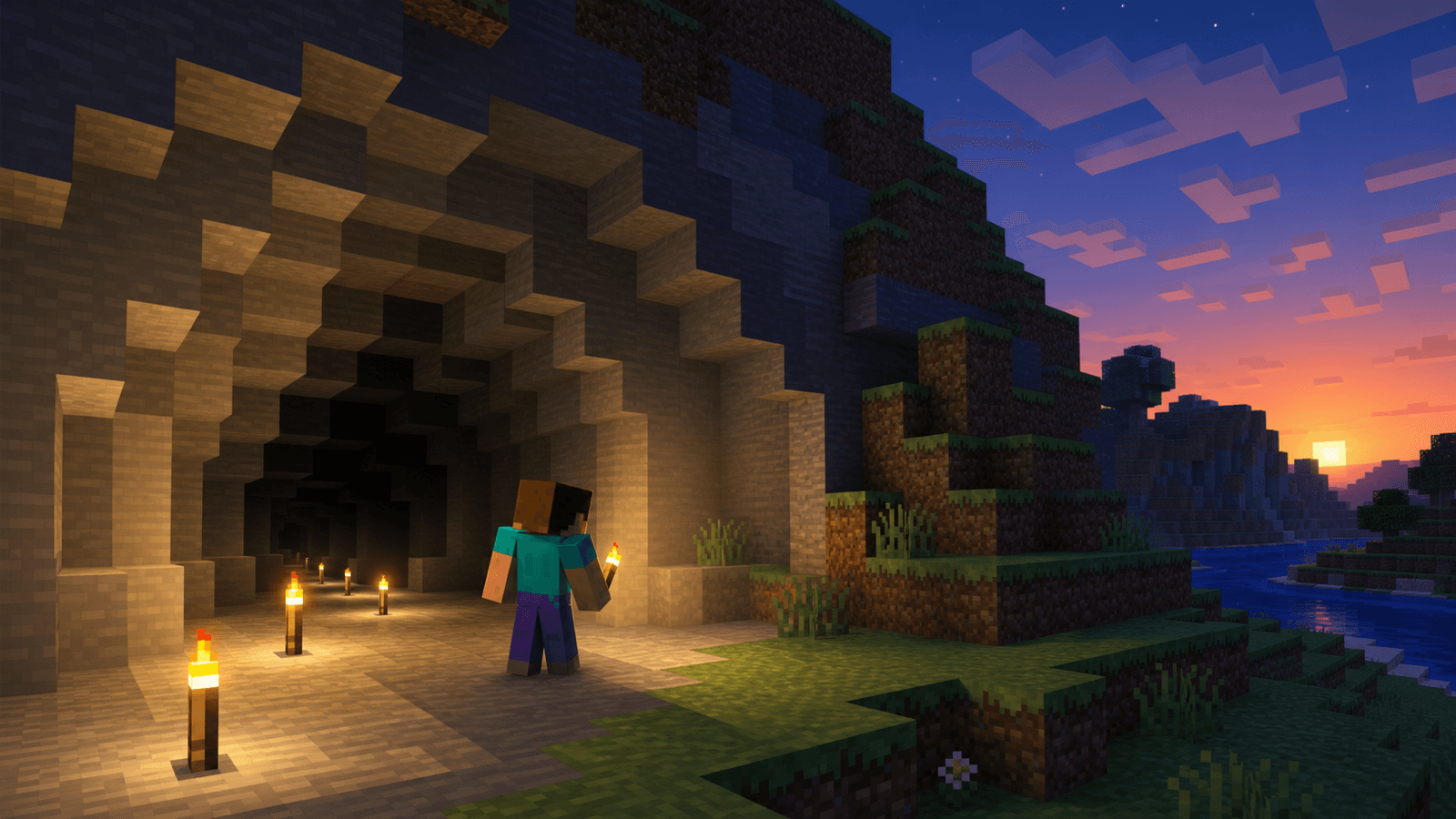
Beta 1.8 pushed the mood again. The Adventure Update introduced a new lighting engine where block lighting could be tinted by the most prominent source, artificial light gained a subtle flicker, and the day-night cycle no longer needed chunk updates to transition smoothly. In plain server terms, the same torch-lit hallway could feel less like a grid and more like a place.
Why players still ask for old lighting
The community evidence is consistent: players remember old lighting as an atmosphere, not just a setting. A Reddit thread asking whether Minecraft's lighting used to be darker drew answers about beta videos, higher contrast, brightness defaults, and the way old non-smooth lighting made caves feel more severe. Another Golden Age Minecraft thread asked how to get the old lighting engine in modern Minecraft, which shows that the desire is not only historical curiosity.
That distinction is important when comparing vanilla Minecraft servers. Turning Smooth Lighting off is not the same as running an old version. Lowering brightness is not the same as restoring every alpha or beta lighting behavior. A resource pack can make the game feel closer, and a mod can go farther, but those choices move the experience away from strict out-of-the-box vanilla even when the world rules stay survival-focused.
Minecraft Feedback has the same pattern in miniature. One player asked for an option to restore old non-smooth sunrise and sunset lighting, clarifying that the choppy alpha and early beta transitions made nights feel more impactful. That is not a request for better mob spawning math. It is a request for a remembered rhythm: sudden dusk, harder shadows, and the feeling that the world became dangerous quickly.
What it means for server selection
If you are browsing vanilla Minecraft servers on the homepage server list, lighting claims should make you ask sharper questions. Is the server current Java or Bedrock vanilla? Does it recommend a client resource pack? Does it require a mod loader? Is the map an old-version survival world, a modern world with nostalgia visuals, or a museum-like project that preserves older chunks?
Those details matter because "vanilla" is strongest when it tells you what will happen after you join. A current vanilla server should not require a special visual stack to match its promise. A nostalgia server can absolutely recommend one, but it should label that choice clearly. A semi-vanilla server may use performance mods, visual guidance, or custom rules, but those should be separated from the survival rules players care about.
The same habit helps when reading other Minecraft history articles. Old boats, old hunger, old terrain, and old lighting all carry real memories, but the practical question is always the same: does the server reproduce the mechanic, the look, the map history, or only the mood?
Better questions before joining
The best vanilla Minecraft servers make lighting and version choices boringly clear. They name the current version. They explain whether resource packs are optional. They avoid using nostalgia words as a substitute for rules. They tell players whether the world is strict vanilla, old-version survival, or a modern server with a retro visual recommendation.
Ask about mob spawning and light-level rules only when the server is not current vanilla or when it advertises old mechanics. Ask about client setup when the server advertises beta atmosphere. Ask whether screenshots show vanilla settings, shaders, resource packs, or edited promotional images. Good server listings can answer those questions without turning the join process into detective work.
Minecraft's old lighting is worth remembering because it changed how survival felt. Harder contrast made caves, sunsets, and torch paths read differently. Smooth lighting made the world easier on the eye. Later engine work cleaned up bugs and made modern worlds more consistent. For server shoppers, that history is useful because it turns a vague promise into specific checks: version, visuals, rules, and honesty. Once those are clear, the lighting can be a style choice instead of a surprise.